
Where Interior Designers Download Kitchen and Bathroom 3D Models (2026 Guide)
- Home
- Where Interior Designers Download Kitchen and Bathroom 3D Models (2026 Guide)
- Where Interior Designers Download Kitchen and Bathroom 3D Models (2026 Guide)
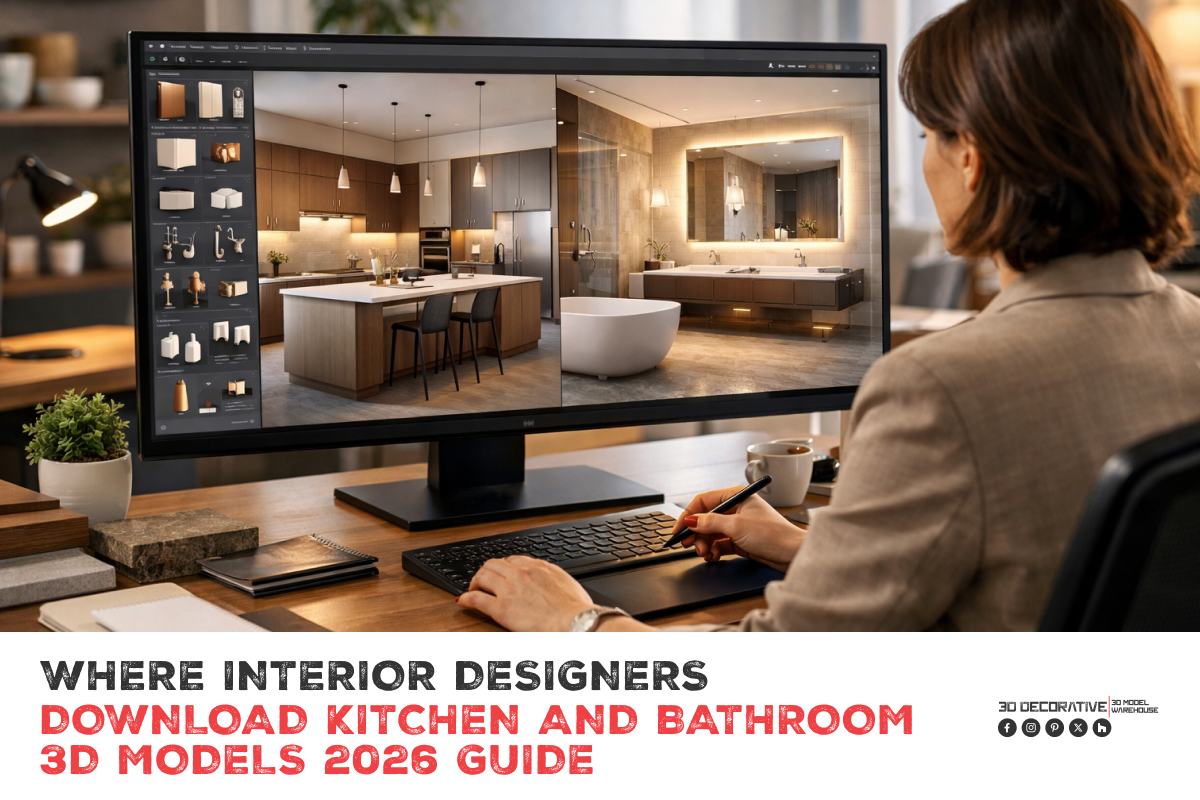
Interior design has become increasingly visual over the past decade. Clients no longer rely only on drawings or mood boards — they expect realistic 3D presentations that help them clearly understand how a space will look before construction begins.
For kitchen and bathroom designers, this expectation is even higher. These spaces involve detailed products such as cabinetry, vanities, faucets, lighting, and fixtures that must be accurately represented. This is why high-quality 3D models have become an essential part of modern design workflows.
In this guide, we’ll explore where interior designers download kitchen and bathroom 3D models in 2026, what to look for in a model library, and how the right resources can dramatically improve productivity and client satisfaction.
Why Designers Need High-Quality 3D Models
Creating 3D models from scratch is time-consuming and often unnecessary. Designers prefer ready-to-use models because they allow faster project development and more realistic results.
Professional 3D models help designers:
- Save hours of modeling time
- Improve visualization quality
- Present ideas clearly to clients
- Increase approval rates
- Reduce revisions
- Focus on creativity instead of technical work
Instead of building every faucet or cabinet manually, designers can simply import accurate models and continue designing.
Types of Kitchen and Bathroom Models Designers Search For
Interior designers typically download models that help them complete full environments rather than individual objects.
The most popular categories include:
Kitchen Models
- Kitchen cabinets
- Islands and storage units
- Appliances
- Sinks and faucets
- Lighting fixtures
- Decorative accessories
Bathroom Models
- Bathroom vanities
- Bathtubs and showers
- Faucets and fixtures
- Mirrors
- Lighting
- Accessories and décor
Using a combination of these categories helps create complete and realistic presentations.
Where Designers Download 3D Models in 2026
There are several types of platforms available, each with its own advantages and limitations.
General 3D Marketplaces
Large marketplaces offer models for many industries, including gaming, architecture, and animation. They provide variety but often lack specialization for interior design projects.
Common challenges include:
- Inconsistent quality
- Incorrect scale
- Missing textures
- Limited compatibility
- Irrelevant categories
Designers often spend significant time searching for usable models.
Manufacturer Catalogs
Some product manufacturers provide downloadable models for their products. These models can be accurate but are usually limited to specific brands or collections.
Limitations include:
- Restricted variety
- Limited file formats
- Incomplete product ranges
- Difficult integration into workflows
While helpful, they rarely provide complete design solutions.
Specialized Interior Design Libraries
The most efficient option for designers is specialized libraries focused specifically on interior spaces such as kitchens and bathrooms.
These platforms offer:
- Relevant product categories
- Consistent quality
- Accurate dimensions
- Designer-friendly formats
- Faster workflow integration
Specialized libraries save time because designers find exactly what they need without extensive searching.
Platforms like 3D Decorative focus specifically on kitchen and bathroom models, offering thousands of ready-to-use assets and textures created for interior designers.
Free vs Paid 3D Model Downloads
One of the biggest decisions designers face is whether to use free or paid models.
Free Models
Advantages:
- No cost
- Easy access
- Good for experimentation
Disadvantages:
- Poor quality
- Incorrect dimensions
- Missing materials
- Compatibility issues
- Limited selection
Free models are often suitable for learning but not ideal for professional projects.
Paid Models
Advantages:
- Professional quality
- Accurate scaling
- Multiple file formats
- Reliable textures
- Better realism
- Consistent standards
For designers working with clients, paid models usually provide better results and long-term efficiency.
Important Features to Look for When Downloading Models
Before downloading models, designers should consider several factors to ensure smooth workflow integration.
Software Compatibility
Models should work with commonly used design tools such as:
- 2020 Design
- SketchUp
- AutoCAD
- 3ds Max
- Rendering software
Multiple File Formats
Flexible file formats increase usability:
SKP • MAX • OBJ • FBX • 3DS • DWG
Accurate Dimensions
Correct proportions ensure layouts remain realistic and functional.
High-Quality Textures
Textures play a major role in achieving photorealistic renderings.
The Growing Demand for Custom 3D Models
As projects become more personalized, designers increasingly require custom models that match specific products or client requirements.
Custom modeling services allow professionals to:
- Match real-world products
- Present unique solutions
- Differentiate from competitors
- Improve project accuracy
Access to custom models is becoming an important advantage in the design industry.
How 3D Models Help Designers Win More Clients
Visualization quality directly impacts client decisions. A realistic presentation builds confidence and helps clients emotionally connect with the design.
High-quality models help designers:
- Create luxury impressions
- Communicate ideas clearly
- Reduce uncertainty
- Increase approval rates
- Build professional reputation
In competitive markets, better presentations often lead to more successful projects.
The Future of 3D Model Libraries for Designers
The demand for realistic interior visualization continues to grow every year. As technology improves, designers will rely even more on professional model libraries to maintain efficiency and competitiveness.
Platforms focused on specific niches — such as kitchen and bath design — will play a major role in helping professionals deliver better results faster.
Conclusion
Interior designers depend heavily on high-quality 3D models to create realistic kitchen and bathroom presentations. While there are many sources available, specialized libraries designed for interior professionals provide the most efficient workflow and consistent quality.
Whether you are designing residential kitchens, luxury bathrooms, or commercial interiors, using professional 3D models can save time, improve presentations, and help impress clients.
If you’re looking for a dedicated library created specifically for kitchen and bath designers, explore thousands of models available at: www.3ddecorative.com

